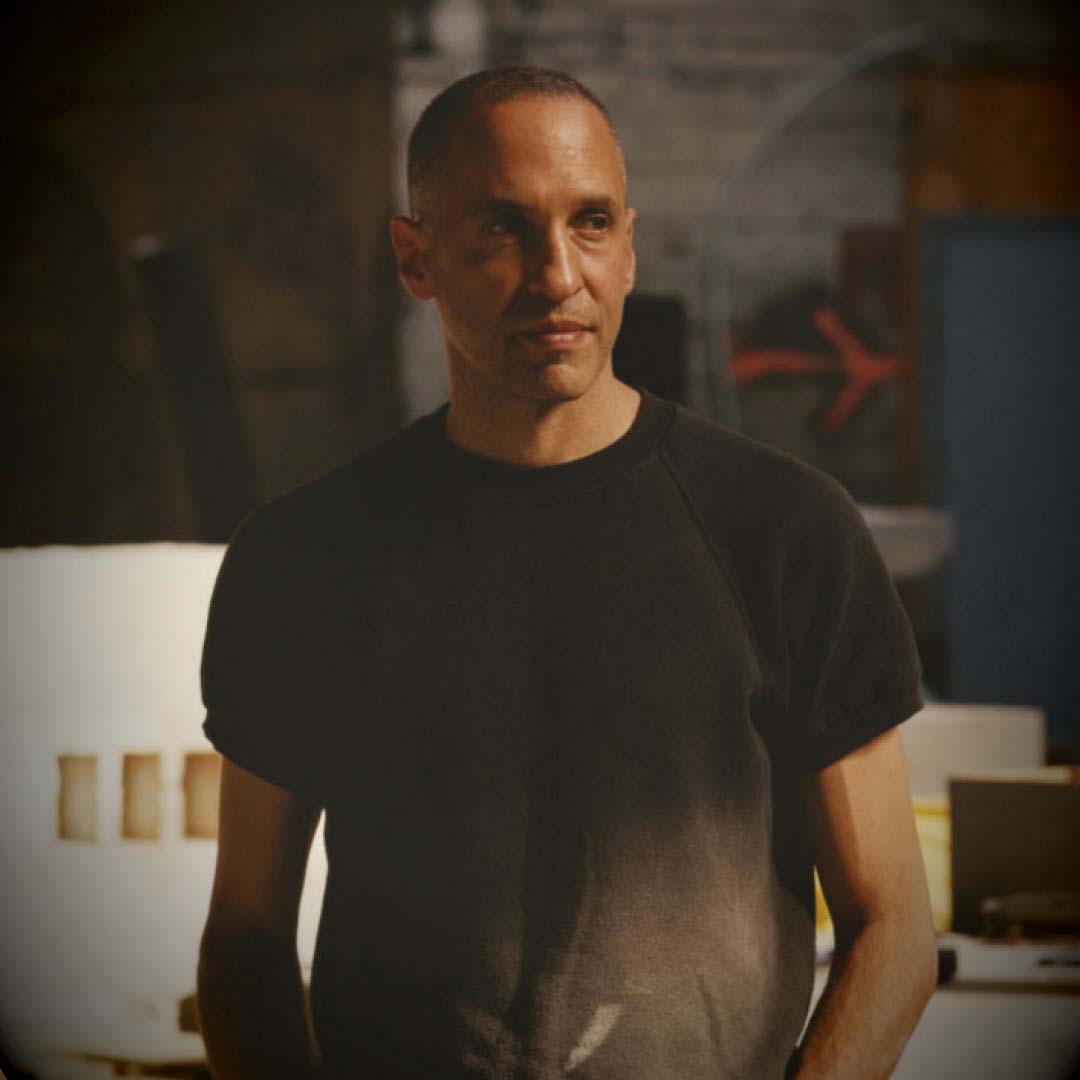
Omer Arbel is the co-founder and creative director of Bocci and the founder of Omer Arbel Office (OAO), an interdisciplinary practice established in Vancouver in 2003. His work spans architecture, lighting, objects, installations, and sculpture, grounded in an ongoing exploration of materials and light as a creative medium.
Omer trained with architect Enric Miralles in Barcelona and later worked with Patkau Architects in Vancouver. His practice is distinguished by a sequential numbering system in which each project, regardless of scale or discipline, is assigned a number in the order of its creation, reflecting his integrated approach to art, design, and architecture.
His built work includes House 75.9, recipient of the 2019 World Architecture Festival Award; Bridge House 91 in British Columbia’s Gulf Islands; and Governors Point, a 16-home community currently in development situated within a 98-acre nature reserve on Washington State’s Salish Sea. His large-scale installations for Bocci have been exhibited internationally at the Victoria and Albert Museum in London, the Barbican Centre, and the Art Institute of Chicago.
Omer is the recipient of the 2026 Sam Carter Applied Art + Design Award of Distinction. The award recognizes an established artist whose extraordinary and sustained accomplishments have made a significant contribution to applied art and design in British Columbia and beyond.
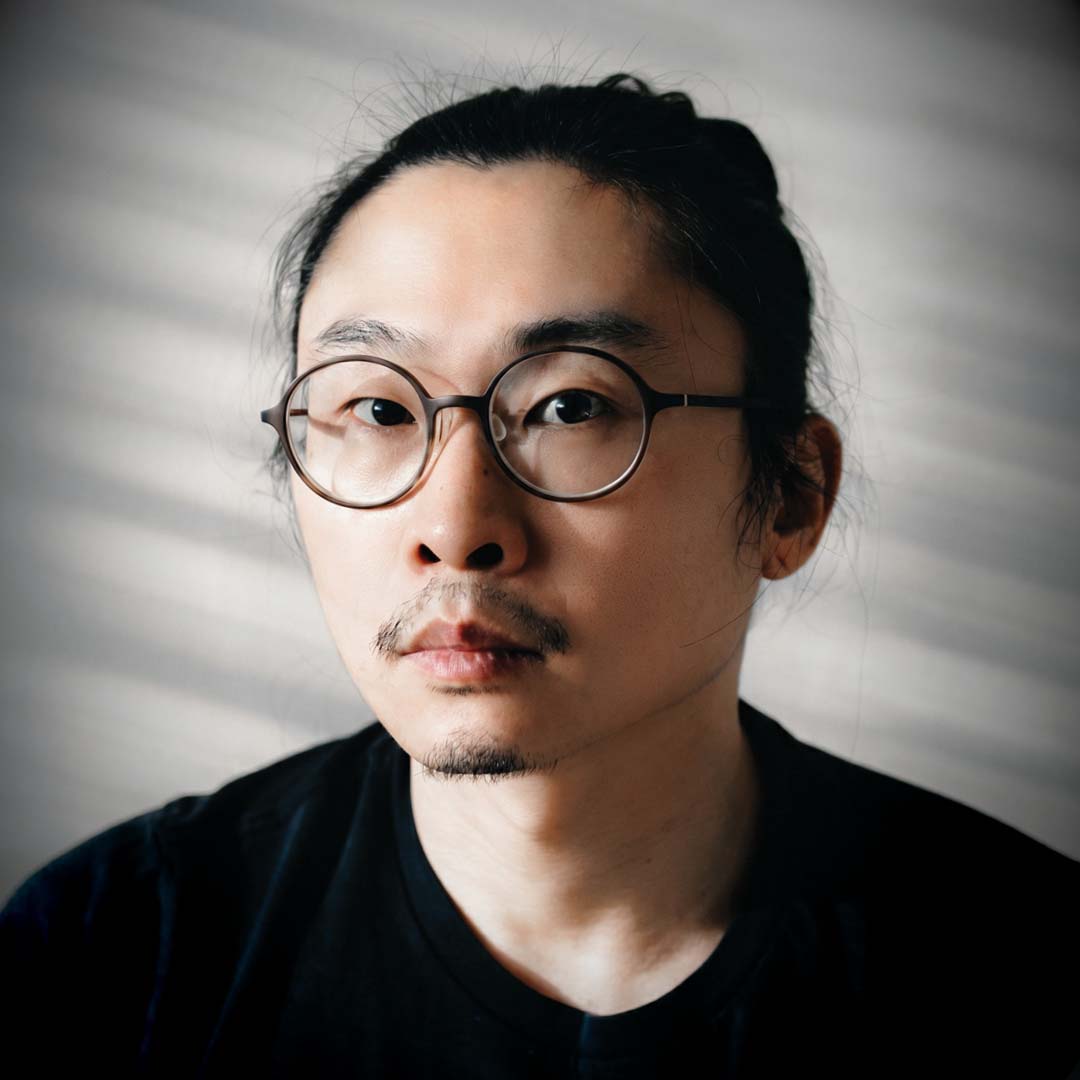
Alan Hung is a furniture and product designer recognized internationally for his combination of innovation, functionality, and aesthetic excellence. Alan creates furniture and products that emphasize ergonomics, emotional connection, and long-term value while challenging conventional forms. His work reflects a commitment to cultural authenticity, material integrity, and environmental responsibility, ensuring each piece is both innovative and enduring.
Driven by a lifelong interest in improving the objects people use every day, Alan approaches design as a process of problem-solving and refinement. Guided by research and an understanding of user experience, his designs respond thoughtfully to purpose, place, and people. By integrating traditional craftsmanship with advanced digital fabrication technologies, he produces designs distinguished by structural clarity, functional refinement, and timeless appeal.
Alan’s influence extends beyond his studio through exhibitions, publications, and international design competitions that bring attention to British Columbia’s thriving design sector. Through collaborations with local artisans and craftspeople, he supports the preservation of traditional skills while advancing contemporary design practice. Recipient of numerous global honours, including the prestigious Red Dot Best of the Best Award, Alan has established a reputation for creating thoughtfully designed objects that balance technical precision with everyday usability.
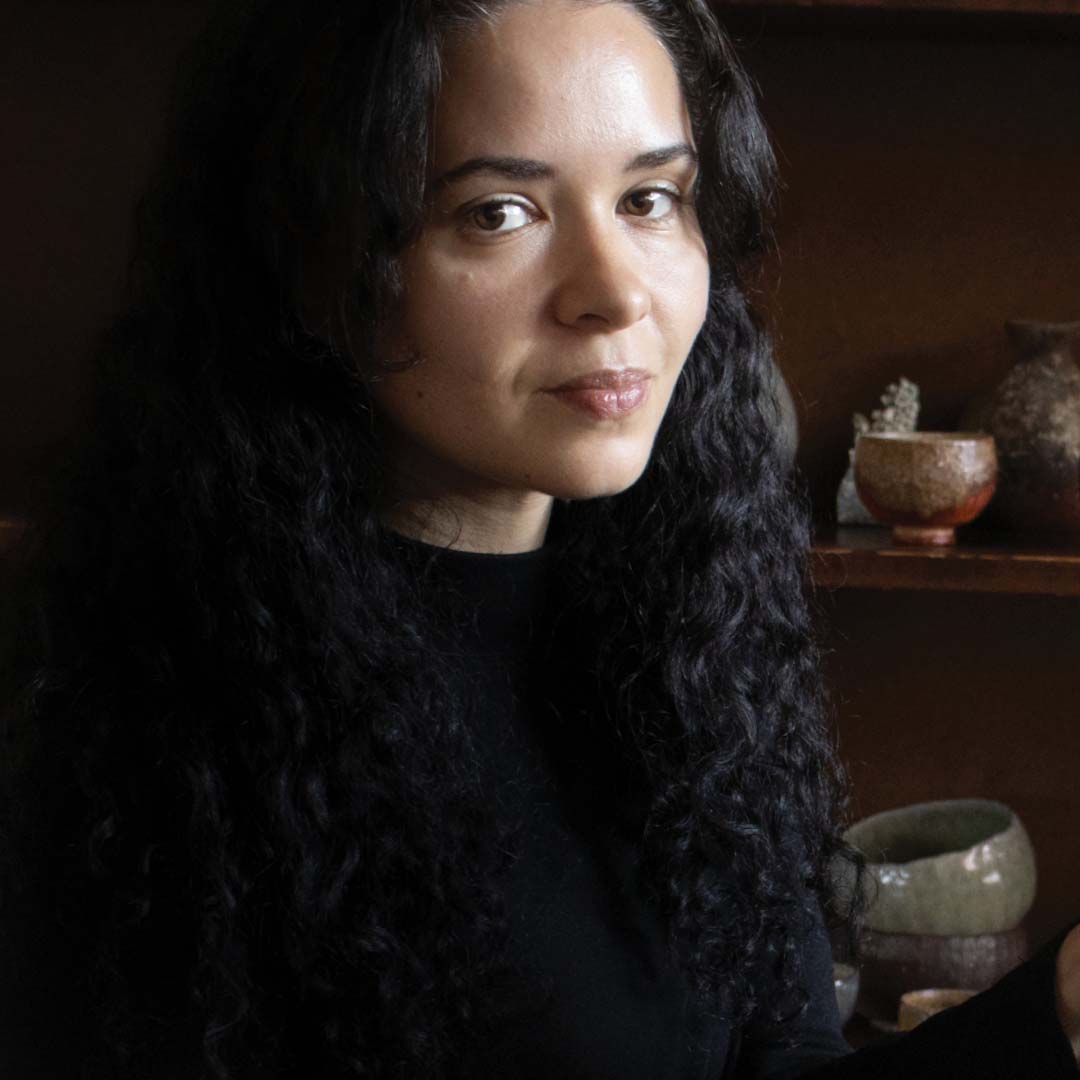
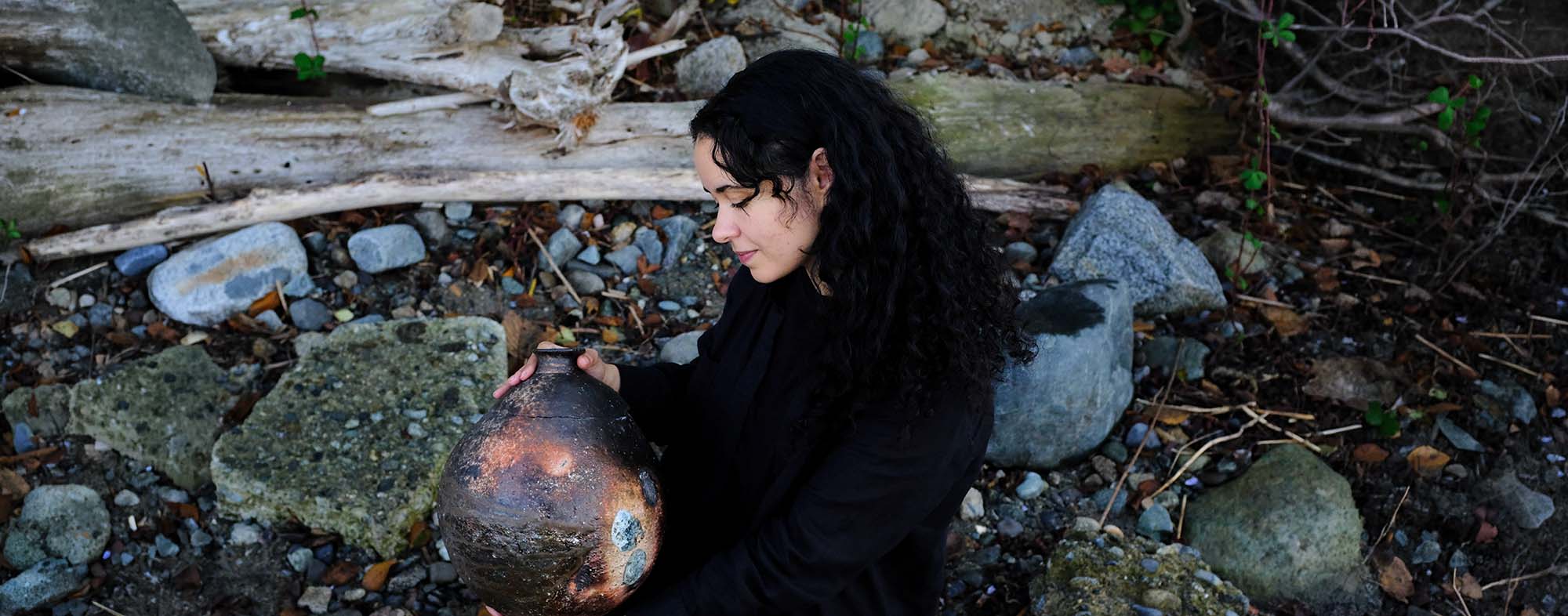
Mona Lisa Ali is a ceramist using regionally collected clay, silt, and hand-crushed stone to make woodfired vessels through traditional pinching and coiling techniques. Her practice began with a 420-kilometre walk across Jordan, her family’s homeland, where she collected clay samples and became interested in how the temporal change of the land’s colours, textures, and minerals were reflected in the material itself. Since returning to British Columbia, Mona has continued this inquiry through a local lens, exploring how materials make a record of what is preserved and lost in the process of reshaping.
Mona works with Anagama and other wood-fired kilns, where continuous wood-stoking, flying ash, and a powerful flame create distinctive surfaces. She is involved in wood-firing communities across BC. Since 2019, she has contributed to the restoration of an Anagama kiln in the Okanagan and helped sustain this ceramic tradition through community firings to ensure it remains active and accessible for future generations.
Mona looks to ceramics as a way of understanding human history. From everyday vessels used for cooking and carrying water to objects connected with ritual and burial, pottery offers a record of how people have lived and related to their surroundings. She sees vessels as objects that carry the materials, histories, and experiences of the places and people they come from.
Mona is the sixth recipient of the Judson Beaumont Emerging Artist designation, named in honour of the late BC-based furniture designer.
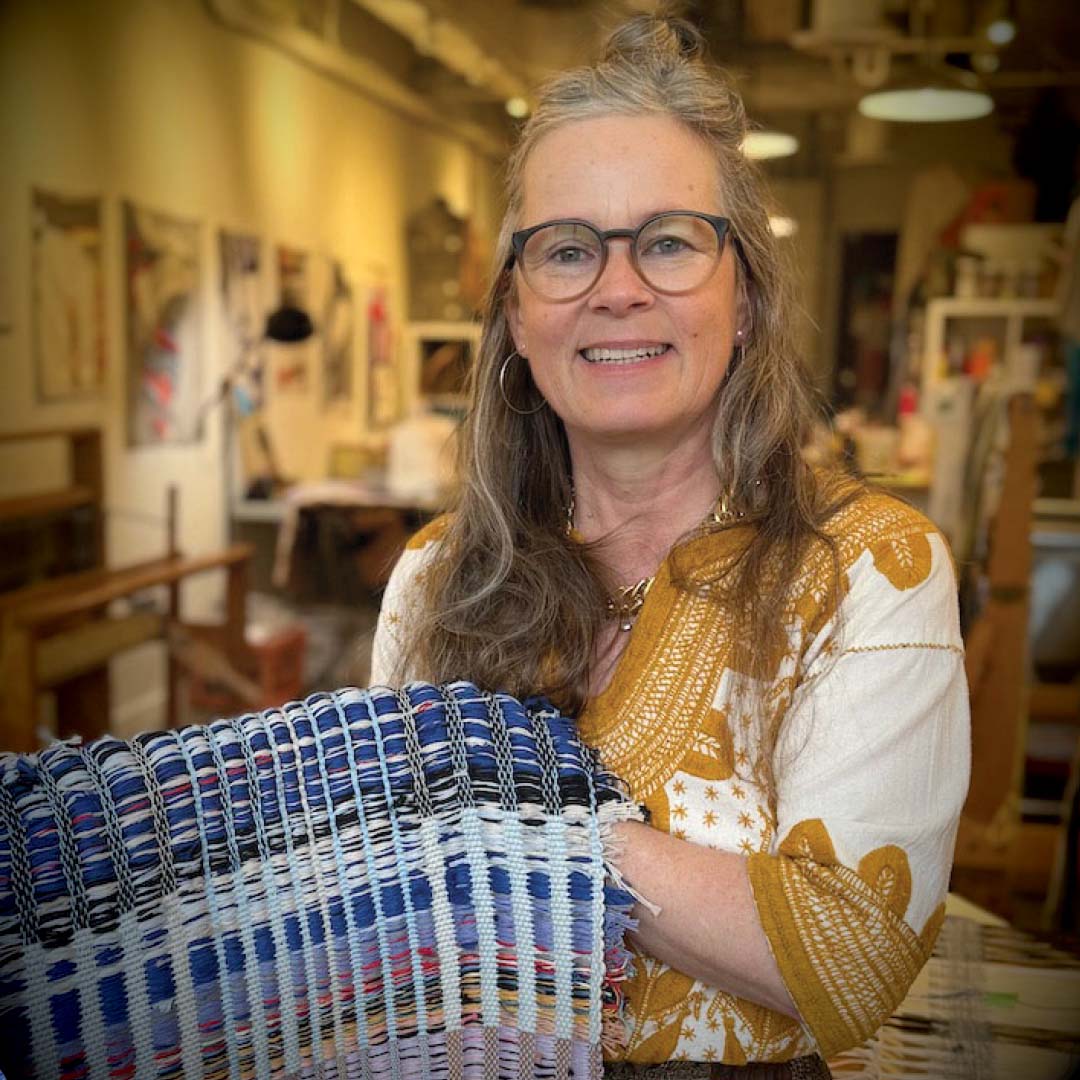
Corrina Hammond is a textile artist, educator, and weaver who creates everything from garments and household goods to rugs and wall hangings, incorporating materials such as cotton, linen, wool, reclaimed fabrics, and textile remnants. Corrina is dedicated to preserving and revitalizing historic weaving techniques and textile literacy. Over the past decade, she has built a handwoven textile career that bridges traditional craft, public engagement, and education. In 2022, she established a weaving studio equipped with five floor looms, creating a hub for learning, experimentation, and the sharing of textile knowledge.
Drawing inspiration from the often-overlooked tools and objects of domestic life, Corrina examines the cultural and historical significance of handmade textiles. Through weaving, she explores themes of mass production, consumerism, and the decline of traditional making skills, while emphasizing the connections between craft, identity, and place.
An active contributor to British Columbia’s arts sector, Corrina leads workshops, exhibitions, and collaborative projects with organizations including Earth Hand Gleaners for the Heart of the City Festival, the Western Front, the Museum of Vancouver, and the Polygon Gallery. Her rag rug weaving workshops transform worn textiles into functional objects while fostering conversations about memory, sustainability, and textile waste.

Mario Pao is a multidisciplinary artist, designer, and maker whose practice bridges architecture, traditional craft, and material innovation. Trained as both an architect and a woodworker, Mario leads Workbench Studio—an interdisciplinary design studio that produces conceptually rich, technically precise, and boldly original work.
From large-scale installations to finely detailed furniture and objects in wood, metal, and ceramics, Mario’s work reflects an intuitive understanding of materiality and form. His pieces are grounded in rigour and craft yet always reach beyond function—inviting deeper dialogue about space, identity, and the handmade. Beyond the materials and the creation of the physical objects themselves, he shows a deft hand at bringing people into his studio that can contribute their own knowledge and artistry to elevating the body of work beyond the output of a single person.
Mario’s art has a growing influence across BC’s creative landscape, exemplifying ambition, ingenuity, and cultural contribution.
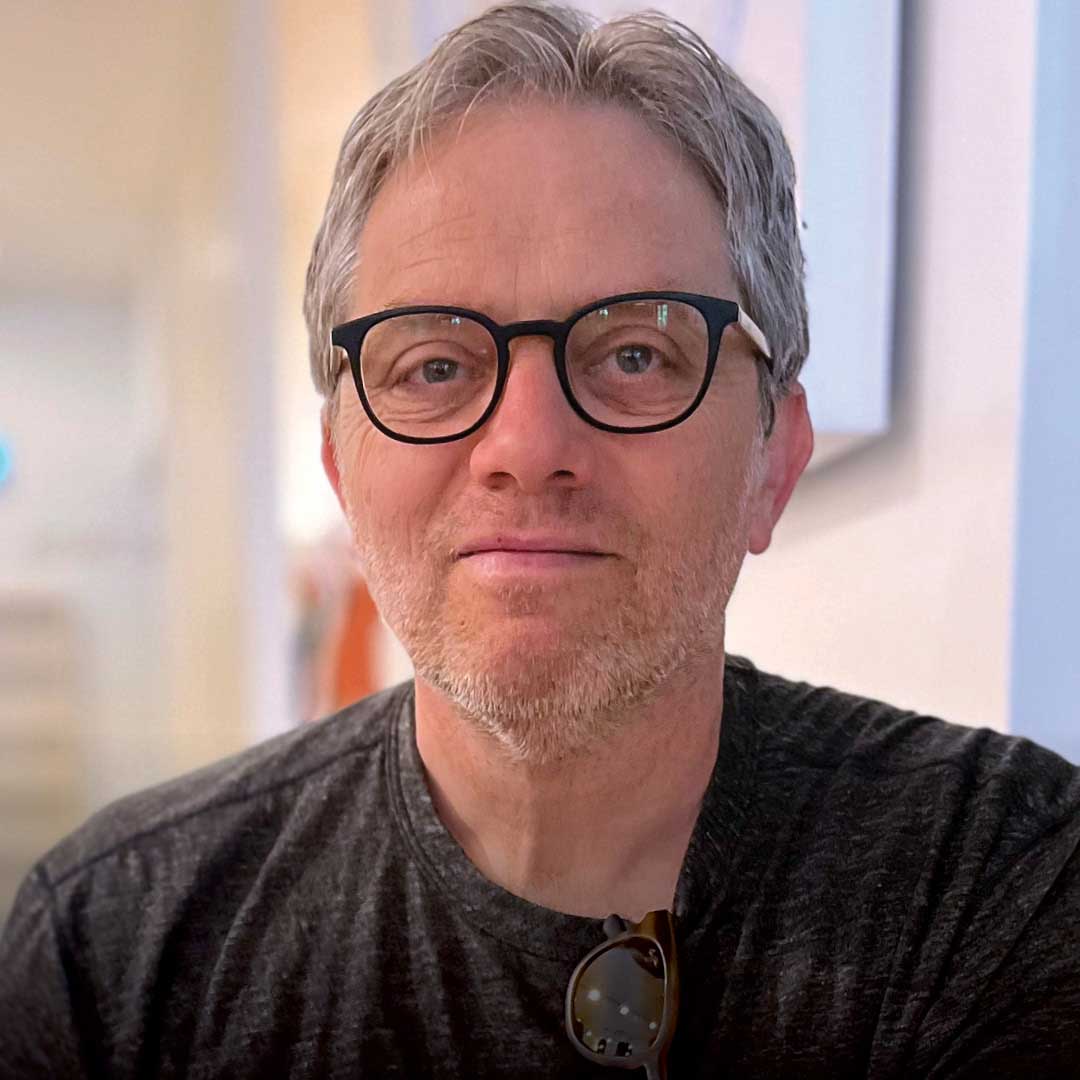
Russell Hackney is a third-generation ceramic artist whose porcelain works reflect over four decades of skill, refinement, and dedication to the art of slip-casting and relief modelling. Trained in Stoke-on-Trent, England—long considered the heartland of fine ceramics—Russell apprenticed under his father in the family pottery before earning a degree in 3D Design. Since immigrating to British Columbia in 2002, he has become a vital contributor to the province’s design and clay communities through both service and artistry.
Working from his studio on Bowen Island, Russell draws inspiration from the natural world and cultural undercurrents, producing embossed porcelain forms that merge technical mastery with contemplative design. His dual role as maker and mentor has introduced many to the possibilities of slip-casting and mould-making, supporting artists across BC. In both functional ware and sculptural expression, Russell’s work carries forward a legacy of excellence in applied art.
Russell is the 2025 Applied Art + Design (AAD) Award of Distinction recipient. The Award of Distinction is presented to an established artist in recognition of extraordinary and sustained accomplishment in applied art + design. Recipients exemplify committed vision, innovative enterprise, and their community and province.

Tyler James Goin is an emerging voice in contemporary ceramics and metal-based craft, recognized for sculptural works that merge industrial precision with emotional depth. With nearly two decades of creative exploration across painting, music, and writing—and early mentorship from sculptor Tony Bloom—Tyler brings rare interdisciplinary fluency to his practice. His foundation as a Red Seal Millwright in Vancouver’s heavy industrial sector grounds his work in structure, material sensitivity, and a deep respect for process.
Tyler’s practice centres on large-scale ceramics and forged metalwork that evoke the strength and solitude of the mountainous landscapes he grew up in. His forms carry a quiet complexity—pieces that feel both monumental and intimate. With a growing presence in BC’s design and craft community, Tyler exemplifies the values of innovation, resilience, and material intelligence.
Tyler is the fifth recipient of the Judson Beaumont Emerging Artist designation, named in honour of the late BC-based furniture designer.
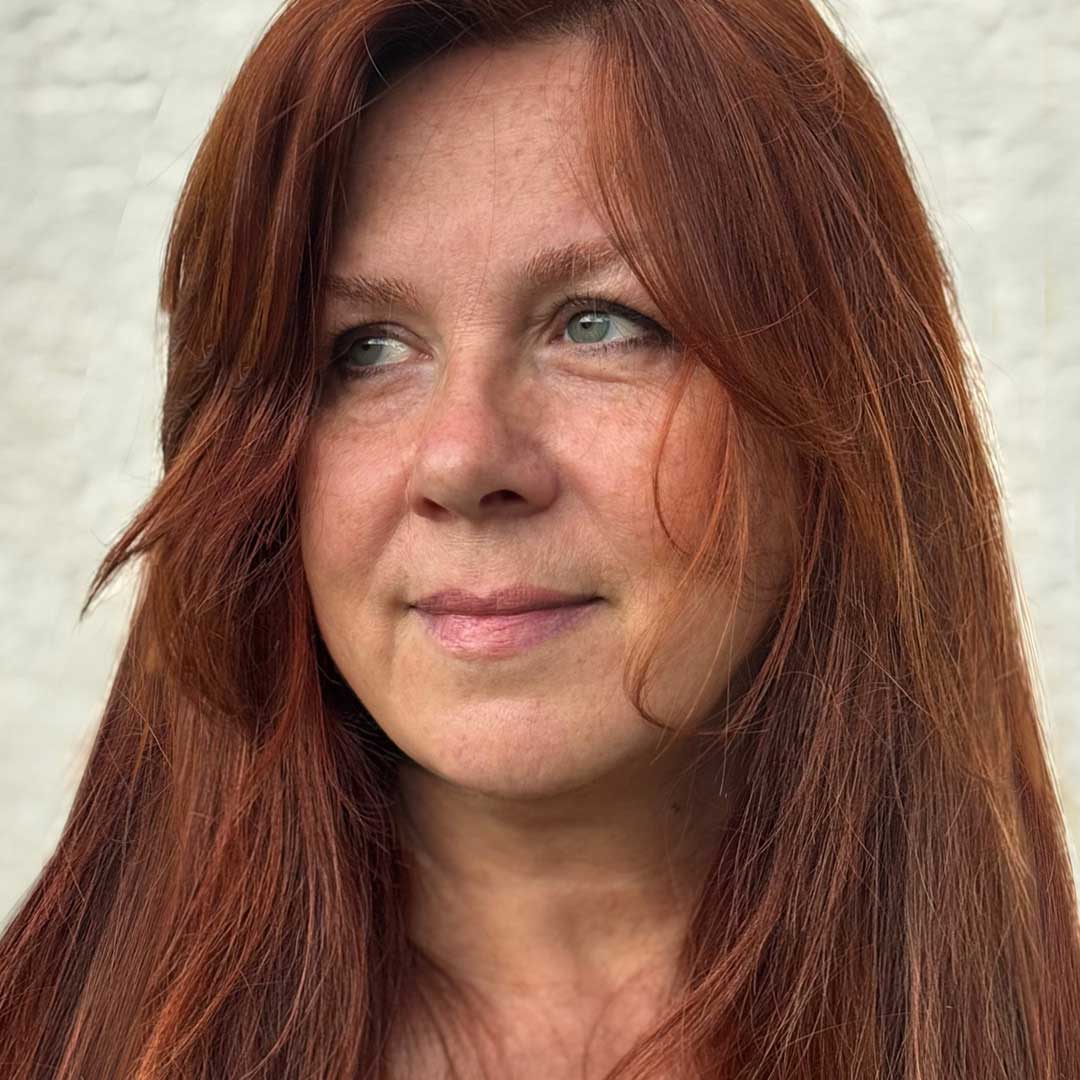
Bettina Mueller Reichl is the founder and creative force behind Cape de Coeur, a Vancouver-based outerwear label that represents a groundbreaking fusion of high performance and high fashion. Drawing on a lifelong passion for clothing design and a deep-rooted artistic sensibility, Bettina has developed a line of high-fashion rain capes that are both waterproof and windproof—crafted using a proprietary three-layer fabric developed in partnership with an innovative European mill. Her garments challenge conventional fashion narratives while responding directly to British Columbia’s climate and lifestyle.
Inspired by the Pacific Northwest’s natural elements and informed by the province’s legacy of technical innovation, Bettina creates pieces that reflect timelessness, individuality, and environmental consciousness. Her work contributes significantly to BC’s cultural economy by advancing innovation in fashion and showcasing the region’s creative potential on a global stage.