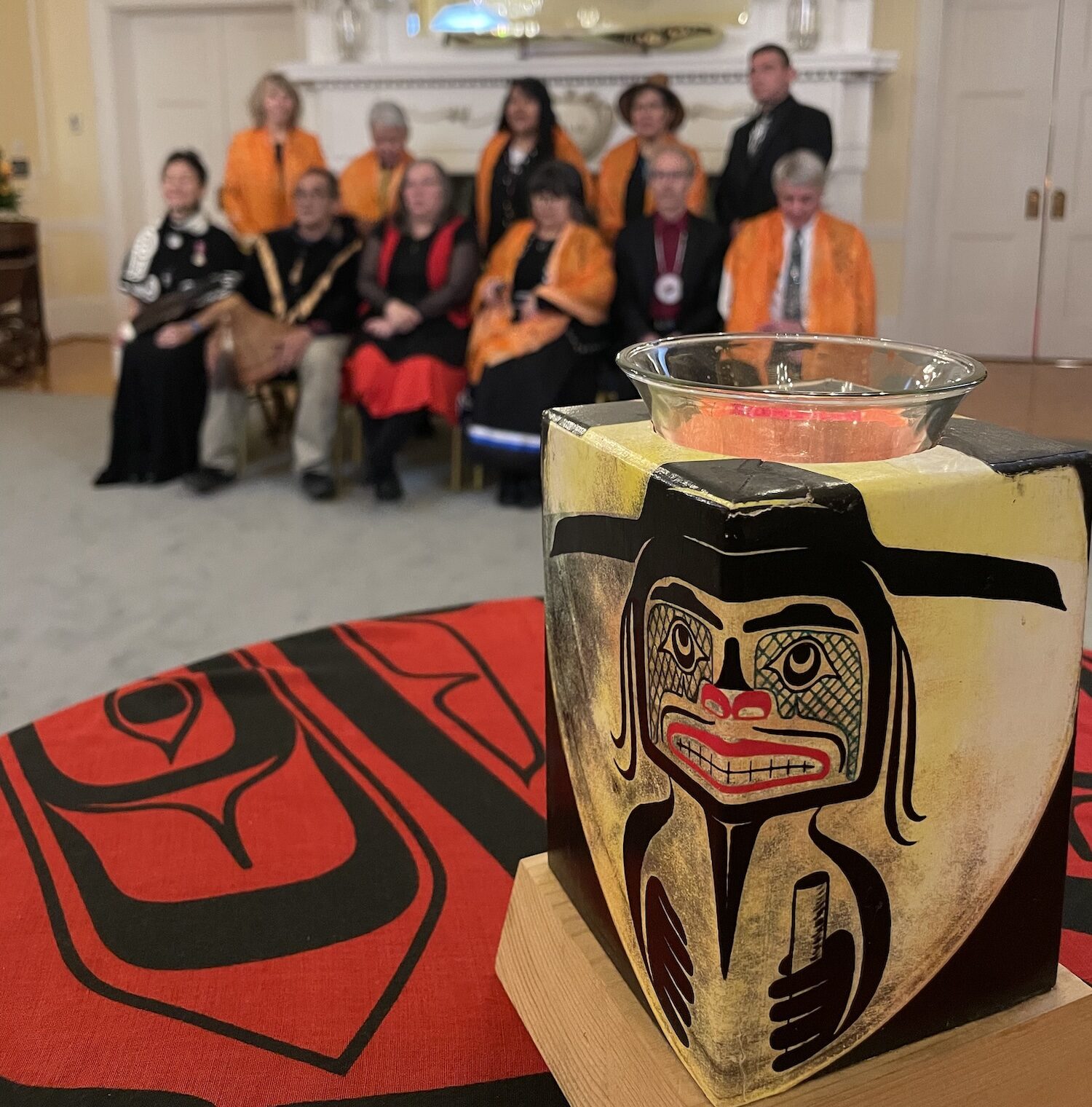
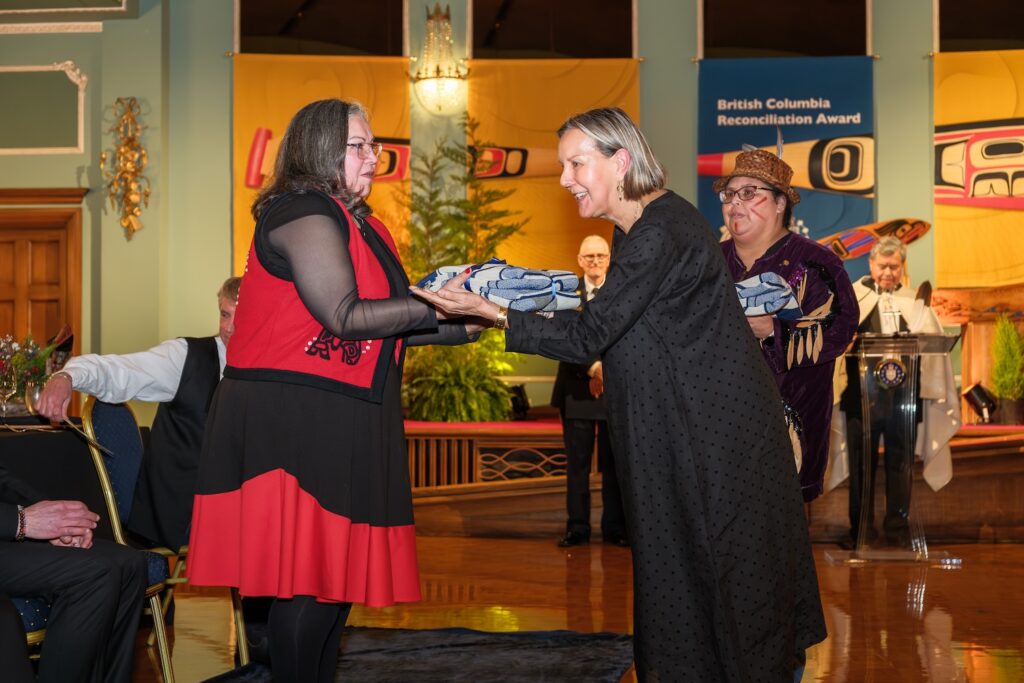
In January 2026, leaders from across British Columbia gathered at Government House, where Her Honour, the Honourable Wendy Cocchia, recognized this year’s recipients of the BC Reconciliation Award. The ceremony offered a powerful reminder that reconciliation is not a single act or moment—it is an ongoing, collective commitment grounded in truth, relationship, and responsibility.
Established through a partnership between BC Achievement and the Office of the Lieutenant Governor, the BC Reconciliation Award was created to recognize individuals, groups, and organizations who are advancing reconciliation in meaningful and lasting ways. From its inception, the award has sought to elevate work that acknowledges the truths of the past and actively contributes to a more equitable future.
Now in its sixth year, the award continues to reflect the many ways reconciliation takes shape across the province. The 2026 recipients—like those honoured in years prior—demonstrate that reconciliation lives in action: through community leadership, advocacy, education, and the quiet, consistent work of building trust.
“Reconciliation is about listening deeply, acting with integrity, and standing together in ways that create real and lasting change,” says BC Achievement Foundation Board Member and honorary award advisor, Cloy-e-iis, Judith Sayers. “Across British Columbia, we are seeing powerful examples of leaders who shape solutions that strengthen communities and honour cultural knowledge. The British Columbia Reconciliation Award shines a light on this work — work that transforms systems, restores trust, and opens new pathways forward.”
At its core, reconciliation requires us to listen, to confront difficult histories, to recognize ongoing impacts, and to commit to change. This work is guided by values of integrity, respect, and shared understanding, and it calls on all of us to participate in shaping a better path forward.
The BC Reconciliation Award also serves an important role beyond recognition. It creates space to share stories—stories of leadership, resilience, and innovation—that can inspire others to act. Across British Columbia, there are countless examples of reconciliation underway: partnerships between Indigenous and non-Indigenous communities, initiatives that centre Indigenous knowledge and language, and systems-level changes that seek to address inequities. By bringing these efforts into the light, the award helps to build momentum and encourage broader participation.
The January ceremony at Government House was both a celebration and a call to action. It honoured those who are leading the way, while also inviting reflection on the role each of us can play. Reconciliation is not complete, nor is it linear. It requires sustained effort, openness, and the willingness to learn and unlearn.
As we look ahead, the work continues—in communities, organizations, and relationships across the province. The BC Reconciliation Award stands as a reminder that leadership exists in many forms, and that by recognizing and supporting this work, we help shape a more inclusive and connected British Columbia for future generations.
BC Achievement: Elevate Excellence. Share Success. Inspire Change.
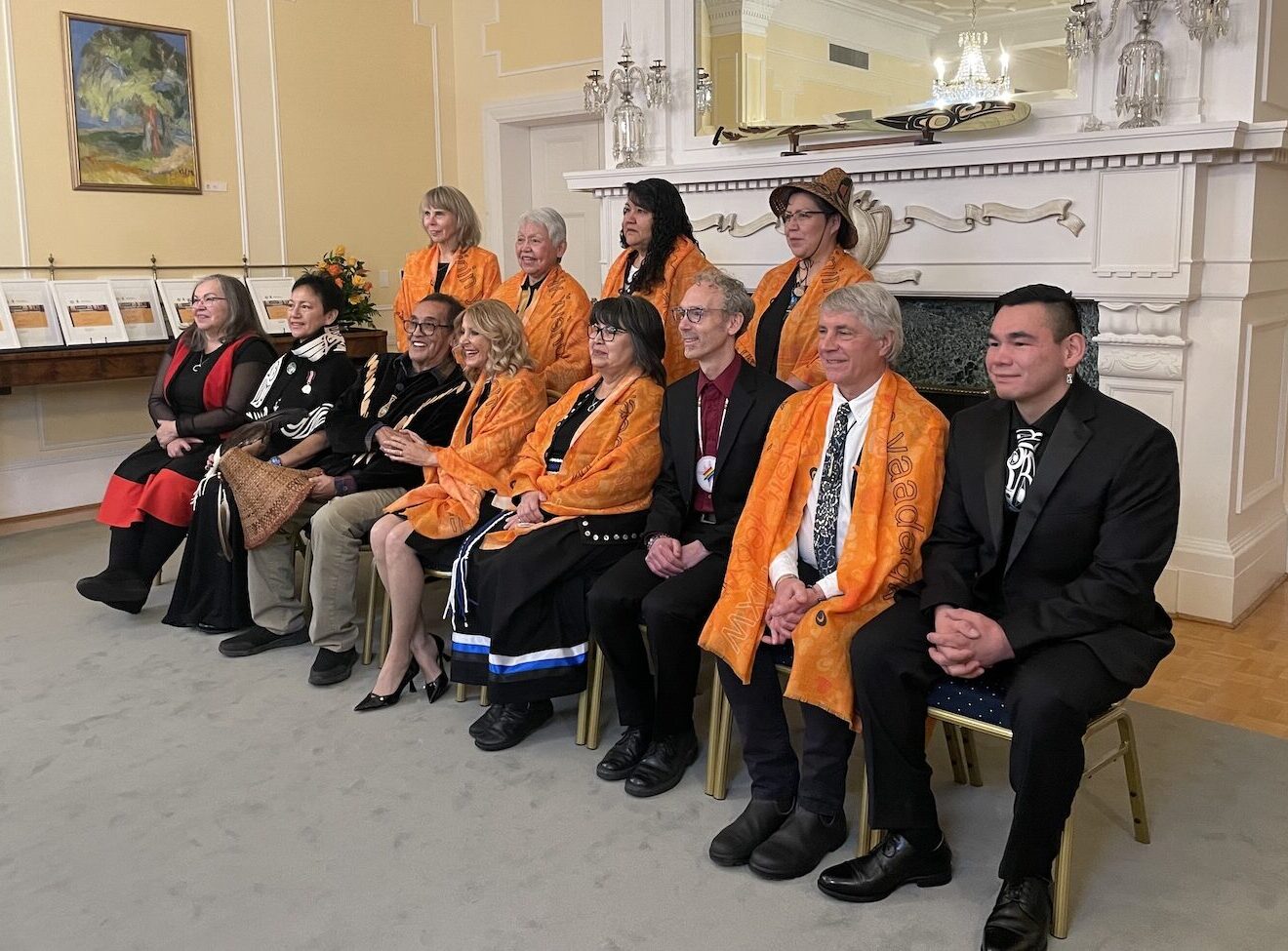
Photo: Recipients of the 2025 BC Reconciliation Award
On January 29,BC Achievement Foundation and the Office of the Lieutenant Governor of British Columbia gathered at Government House to honour the recipients of the 2025 British Columbia Reconciliation Award—remarkable individuals and organizations whose work embodies the principle of putting truth before reconciliation.
Now in its fifth year, the BC Reconciliation Award recognizes leadership that reflects truth before reconciliation while strengthening relationships between Indigenous and non-Indigenous communities across the province. The 2025 recipients reflect the many ways reconciliation lives in action: through housing and community development, cultural revitalization, youth leadership, advocacy, and the steady, often unseen work of building trust and understanding over time.
This year’s individual recipients—Charlene Belleau (Eaglestar Woman), Kevin Borserio (Luu G̱aahlandaay), Deanna Duncan (H̀búkvs λamalayu), and Dwight Ballantyne, the inaugural recipient of the Phyllis Webstad Emerging Leader—were celebrated alongside organizational recipients Aboriginal Housing Management Association, Honouring Our Elders Legacy Project Coordinating Team, and syíyaya Reconciliation Movement. Together, they represent diverse communities and approaches, united by a shared commitment to reconciliation grounded in truth, accountability, and care.
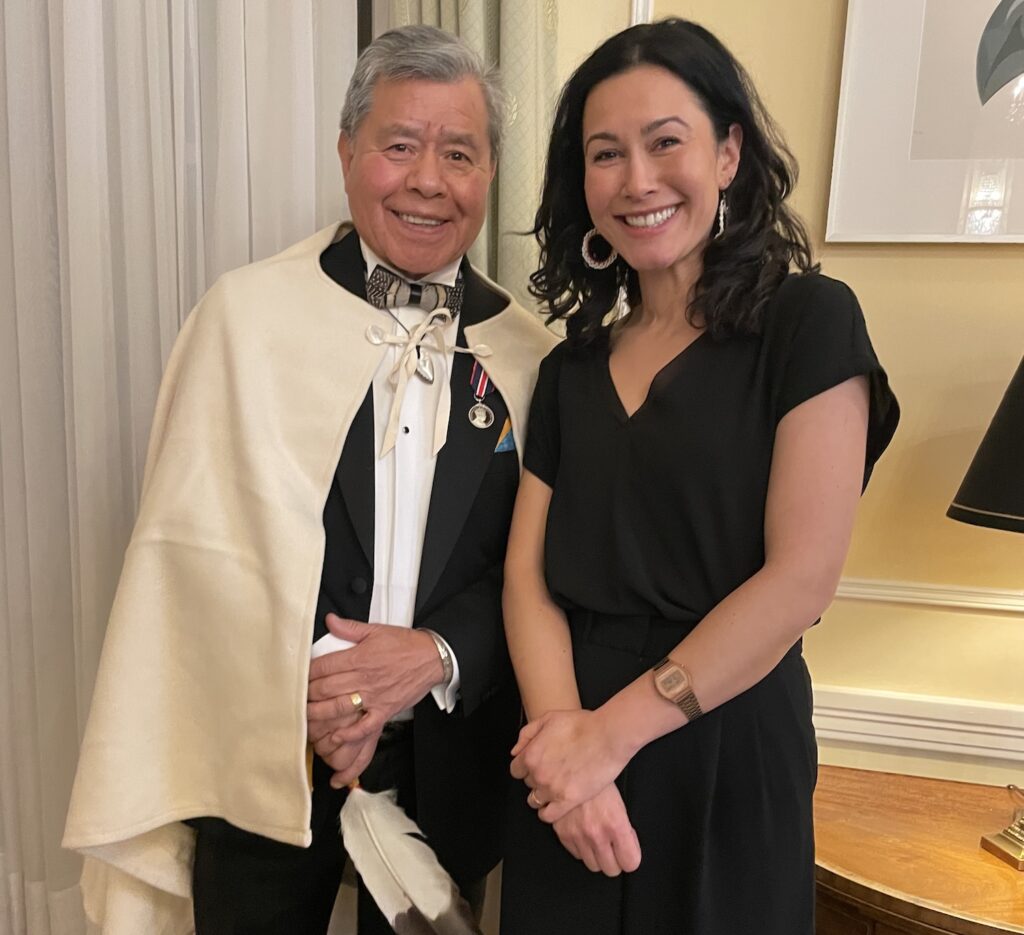
Photo: Patrick Kelly and Sarika Cullis-Suzuki
As BC Achievement Foundation Board Member and honorary award advisor Judith Sayers (Cloy-e-iis) reflected during the ceremony that, reconciliation requires listening deeply, acting with integrity, and standing together in ways that create real and lasting change. The Reconciliation Award shines a light on work that transforms systems, restores trust, and opens new pathways forward.
The Honourable Wendy Cocchia, Lieutenant Governor of British Columbia, also acknowledged the recipients’ accomplishments as being rooted in sharing knowledge, supporting community, and uplifting culture, language, and tradition—demonstrating what it truly means to weave truth with reconciliation.
A Living Legacy
The British Columbia Reconciliation Award draws inspiration from the late Honourable Steven Point [Xwĕ lī qwĕl tĕl], whose hand-carved red cedar canoe, Shxwtitostel, symbolizes the understanding that “we are all in the same canoe” and must paddle together to move forward. At last week’s award ceremony, Steven Point inspired the attendees with his closing words, saying “Let’s stay the course on reconciliation. Let’s stand together as Canadians and begin to tell a new story for future generations.”
In honour of this legacy, each 2025 recipient received a commemorative paddle print designed by Stephanie Anderson, 2024 Crabtree McLennan Emerging Artist recipient of the Polygon Award in First Nations Art. Anderson’s paddle joins others installed at Government House, forming a growing and visible testament to reconciliation in action—one that continues to expand with each year’s recipients.
Recognize Remarkable
The January ceremony offered a moment not only to celebrate, but to reflect. Across British Columbia, reconciliation is being advanced every day—often quietly—by individuals and organizations committed to truth, relationship-building, and systemic change.
BC Achievement’s programs begin with a simple but powerful act: someone choosing to recognize remarkable work in their community. The BC Reconciliation Award, alongside programs such as the Indigenous Business Award and the First Nations Art Award, exists because people take the time to lift up leadership that deserves wider recognition.
Nominations for 2026 Are Open
As we honour the 2025 recipients, we invite you to look ahead. Nominations for BC Achievement’s 2026 award programs are now open. If you know someone whose work strengthens community, advances reconciliation, or inspires others through leadership, creativity, or service, we encourage you to submit a nomination.
By recognizing remarkable individuals and organizations today, you help shape a more just, inclusive, and connected future for British Columbia.
Learn more about the BC Reconciliation Award and nomination opportunities at bcachievement.com.
BC Achievement: Elevate Excellence. Share Success. Inspire Change.
Vancouver, B.C. – The Office of the Lieutenant Governor of British Columbia, in partnership with BC Achievement Foundation, is honoured to announce the recipients of the fifth British Columbia Reconciliation Award. The 2025 award program recognizes four individuals and three organizations each of whom has demonstratedthe essence of “putting truth before reconciliation”. Their efforts strengthen relationships between Indigenous and non-Indigenous communities while inspiring others to continue this important work.
Individual Recipients:
Charlene Belleau (Eaglestar Woman) – Williams Lake
Kevin Borserio (Luu G̱aahlandaay) – Daajing Giids
Deanna Duncan (H̀búkvs λamalayu) – Klemtu
Phyllis Webstad Emerging Leader
Dwight Ballantyne – Maple Ridge
Organization Recipients:
Aboriginal Housing Management Association – Squamish Territory, West Vancouver
Honouring Our Elders Legacy Project Coordinating Team – Smithers
syíyaya Reconciliation Movement – Sechelt
“Reconciliation is about listening deeply, acting with integrity, and standing together in ways that create real and lasting change,” said BC Achievement Foundation Board Member and honorary award advisor, Cloy-e-iis, Judith Sayers. “Across British Columbia, we are seeing powerful examples of leaders who shape solutions that strengthen communities and honour cultural knowledge. The British Columbia Reconciliation Award shines a light on this work — work that transforms systems, restores trust, and opens new pathways forward. It is an honour to recognize the 2025 awardees. On behalf of BC Achievement, congratulations to this year’s recipients, and thank you for showing what reconciliation in action truly looks like.” BC Achievement Foundation has several established programs honouring excellence and inspiring achievement throughout British Columbia, including the Indigenous Business Award and the First Nations Art Award.
“I am incredibly inspired by the work of the 2025 BC Reconciliation Award recipients,” said the Honourable Wendy Cocchia, Lieutenant Governor of British Columbia. “Their accomplishments are rooted in sharing knowledge, supporting their communities, and uplifting culture, tradition, and language. These recipients exemplify weaving truth with reconciliation by building understanding, restoring trust, and fostering respectful, enduring relationships between Indigenous and non-Indigenous peoples across British Columbia. I share my congratulations and deep admiration for all the recipients and their remarkable work.”
As Lieutenant Governor of British Columbia, reconciliation is a foundational priority of the mandate of the Honourable Wendy Cocchia. This commitment includes participation in promotion of public awareness of the ongoing journey of reconciliation and developing a legacy through the creation of this award.
The British Columbia Reconciliation Award draws inspiration from the work of the Honourable Steven Point [Xwĕ lī qwĕl tĕl], 28th Lieutenant Governor of British Columbia, and a founder of the Award. His hand-carved red cedar canoe, Shxwtitostel, currently on display at the BC Legislature buildings, was created as a symbol of reconciliation, with the understanding that “we are all in the same canoe” and must “paddle together” to move forward.
In honour of this legacy, this year’s recipients will receive a print of a canoe paddle designed by artist Stephanie Anderson to commemorate the award. Anderson is a member of the Likhsilyu “Small Frog” clan of the Witsuwit’en Nation, and has ancestral ties to Kwin Begh Yikh, the “House beside the Fire”. Anderson is the Crabtree McLennan Emerging Artist recipient of the 2024 Polygon Award in First Nations Art Award. The paddle designed by Anderson is installed, alongside previous BC Reconciliation Award paddles, at Government House in Victoria.
The 2025 recipients of the BC Reconciliation Award will be recognized in a ceremony held at Government House on January 29, 2026.
The selection committee for the 2025 British Columbia Reconciliation Award is:
Chief/Kúkpi7 Rosanne Casimir – Tk’emlúps te Secwépemc
Xyolholemo:t, Brenda Crabtree – Spuzzum Band with Nlaka’pamux and Sto:Lo ancestry
Dr. Danièle Behn Smith – Eh Cho Dene of Fort Nelson First Nation and Franco-Manitobain/Métis, Red River Valley
Brendan Eshom – Gitga’at (Hartley Bay) Nation
Chief Willie Sellars – Williams Lake First Nation of the Secwépemc Nation
Phyllis Webstad Emerging Leader award selection committee:
Sarika Cullis-Suzuki
Brendan Eshom
Interviews with BC Reconciliation Award recipients, as well as the Honourable Wendy Cocchia or representatives of the BC Achievement Foundation, are available upon request. Awardee bios and high-resolution images are available here.
2025 BC Reconciliation Award Recipients – Backgrounders
GROUPS & ORGANIZATIONS
Aboriginal Housing Management Association (AHMA) Squamish Territory, West Vancouver
For 30 years, the Aboriginal Housing Management Association (AHMA) has been a driving force in advancing housing rights for Indigenous Peoples living in urban, rural, and northern areas across British Columbia. AHMA members provide over 95% of off-reserve Indigenous housing, supporting over 10,000 individuals and families.
AHMA is the only Indigenous-led organization dedicated to meeting the housing needs of non-status and colonially displaced Indigenous Peoples in BC. AHMA reclaims self-determination through housing that honours tradition and community while advocating tirelessly for culturally grounded, self-determined housing solutions.
In 2022, AHMA released BC’s first Urban, Rural, and Northern Indigenous Housing Strategy, a groundbreaking For Indigenous, By Indigenous (FIBI) model now recognized as a national benchmark. In 2023, AHMA co-founded the National Indigenous Housing Collaborative, securing the first $4B federal investment for Urban, Rural, and Northern Indigenous housing, and helping drive a historic $500M BC government commitment to establish the Rental Protection Fund. AHMA also led efforts to establish and then double BC’s Indigenous Housing Fund while launching Hišukiš ćawak, an Indigenous-led complex care model that takes a healthcare-based, trauma-responsive approach to addressing homelessness.
In 2025, AHMA launched a gender-based violence housing strategy, an Indigenous Youth Housing Strategy, and a UBCM resolution to establish an Indigenous-led housing alliance in BC. AHMA works in partnership and collaboration with a huge array of dedicated connections provincially and nationally to keep urban Indigenous housing needs and solutions at the forefront.
Guided by the principle “nothing about us without us,” AHMA leads with integrity and vision to ensure every Indigenous person can access safe, affordable, and culturally connected housing. Through its FIBI model, AHMA empowers housing providers building credibility, partnerships, and access to resources. AHMA challenges systems, policies, and colonial legacies to drive meaningful transformation for Indigenous Peoples. Its advocacy and innovation advance reform, strengthen communities, and deepen reconciliation, setting a lasting standard of leadership and impact across the sector.
Honouring Our Elders Legacy Project Coordinating Team Smithers
Launched in 2005-2006 through the collaboration of SD54 Indigenous Education Principal Birdy Markert, Indigenous Support Workers Millie Gunanoot and Melanie Morin, Smithers Secondary School art teacher Perry Rath, and overseen by the SD54 Indigenous Education Council, the Honouring Our Elders Portrait Legacy Project was created to bridge divides, strengthen understanding, and engage reconciliation through art.
Held every two years, the project celebrates one living Elder from both the local Witsuwit’en and settler communities: individuals recognized as carriers of culture and contributors to the well-being of others. After Elders accept the honour, students are selected to paint their portraits, beginning a process of learning, artistic growth, and relationship-building.
The unveiling ceremony – featuring stories, performances, and a shared luncheon – has become a cherished community event, uniting families, youth, and dignitaries in a mutual celebration of respect and gratitude. Each 4’x4’ portrait is permanently displayed outside the school’s main entrance, where it welcomes visitors and affirms the values of community and reconciliation.
Now in its ninth cycle, the project continues to inspire deep reflection and connection. It provides youth with meaningful engagement in social change through art, encourages dialogue about identity and history, and honours Elders whose wisdom and resilience continue to shape the community. The portraits stand as enduring symbols of respect, understanding, and reconciliation.
syiyaya Reconciliation Movement Sechelt
The syiyaya Reconciliation Movement (syiyaya) was founded through the leadership of Hereditary Chief ?akista xaxanak Garry Feschuk, Sechelt Indigenous Elders, and non-Indigenous allies, in collaboration with the shíshálh Nation. Built on the principle of shared leadership, syiyaya fosters open dialogue, education, and relationship-building between Indigenous and non-Indigenous communities on the Sunshine Coast.
Dedicated to truth, healing, and partnership, syiyaya provides spaces for Survivors of the Indian Residential School system to share their stories through community gatherings, films, workshops, and dialogue circles. Projects such as Carving Tears into Dreams of Reconciliation and Weaving Tears into Dreams of Reconciliation have engaged thousands in hands-on, cross-cultural collaboration transforming awareness into action. The resulting public artworks, unveiled in 2024, now stand as lasting symbols of respect, unity, and reconciliation.
Since its first Orange Shirt Walk, syiyaya has inspired a community-wide shift in understanding. Annual “syiyaya Days,” held from National Indigenous Peoples Day to Canada Day, celebrate shíshálh culture and have become a model for reimagining national observances. With equal Indigenous and non-Indigenous representation, the syiyaya Committee and its volunteers continue to lead by example empowering youth, uplifting Elders, and ensuring reconciliation is not an event, but an ongoing relationship built on truth, respect, and shared humanity.
INDIVIDUALS
Dwight Ballantyne (Phyllis Webstad Emerging Leader) Maple Ridge
Dwight Ballantyne, founder of The Ballantyne Project, is transforming awareness into action by amplifying the voices of Indigenous youth living in remote First Nations. Born and raised in Montreal Lake Cree Nation, Saskatchewan, Dwight spent 21 years feeling “invisible,” facing the deep inequities and isolation that shape life in many northern communities. His journey, from those early experiences to building a new life in British Columbia, has become a bridge for understanding between Indigenous and non-Indigenous Canadians.
In 2019, Dwight launched The Ballantyne Project and its powerful campaign #WeSeeYou, using storytelling, mentorship, and education to shine light on “the invisible segment of Canada.” Through in-person and virtual presentations, he has reached thousands of students, educators, corporations, and community groups, sharing lived experiences that reveal how colonial history continues to affect Indigenous youth today.
Dwight’s work directly supports reconciliation by advancing truth-telling and empathy. He develops educational tools and short films that address topics such as residential schools, the Sixties Scoop, and the Pass System, helping Canadians understand the roots of intergenerational trauma.
Beyond awareness, The Ballantyne Project delivers tangible impact—sending resources to remote communities, organizing youth mentorship trips, and fostering partnerships that create opportunities for Indigenous youth. In 2025, Dwight opened the Bridge House in Maple Ridge, a place where Indigenous youth from remote and northern communities can stay while exploring education, employment, and life pathways that are often inaccessible at home. Dwight’s dedication exemplifies reconcili-action: using personal truth to build understanding, connection, and hope across cultures.
Charlene Belleau (Eaglestar Woman) Williams Lake
A lifelong advocate for truth, justice, and healing, Charlene Belleau (Eaglestar Woman) has devoted her career to advancing reconciliation and supporting residential school survivors, their families, and communities across British Columbia.
Appointed in 2021 by the Honourable Murray Rankin, Minister of Indigenous Relations and Reconciliation, as First Nation Liaison, Charlene provides critical guidance to the Province of British Columbia in its response to findings at former Indian Residential Schools and Indian Hospitals. In this role, she serves as a vital bridge between governments and First Nations, helping ensure that communities receive the resources, respect, and support needed to pursue truth, healing, and accountability.
A residential school survivor herself, Charlene has been a leading voice in addressing the intergenerational impacts of colonial institutions. She has supported communities in collecting and protecting oral histories, accessing historical records, and creating safe spaces where survivors can share their truths with dignity and care.
Charlene’s expertise and lived experience have also informed broader public understanding of this history. She served as Senior Investigator on the documentary Sugarcane (2024), which was nominated for an Academy Award (Oscar) for Best Documentary Feature and awarded Best Documentary Feature at the 2024 Sundance Film Festival. Her contribution helped ensure that survivor voices and community perspectives were honoured with integrity and respect.
Over decades of leadership, including her service as Chair of the First Nations Health Council and as Provincial Indian Residential School Coordinator, where she played a key liaison role with the RCMP Native Indian Residential School Task Force, Charlene has worked tirelessly to confront systemic injustice and advance Indigenous rights. Her compassion, integrity, and steadfast commitment continue to inspire a collective journey toward reconciliation grounded in truth-telling, healing, and the restoration of dignity for Indigenous Peoples.
Kevin Borserio (Luu G̱aahlandaay) Daajing Giids
For more than two decades, Kevin Borserio (Luu G̱aahlandaay) has dedicated his life to the preservation and revitalization of the Haida language. Based in Daajing Giids, Kevin served as Coordinator of the Skidegate Haida Immersion Program (SHIP) for over 20 years, guiding it from its early days into a nationally and internationally recognized model for Indigenous language renewal.
When SHIP began in 1998, there was no regular immersion program for Haida. Through Kevin’s leadership and close collaboration with Haida Elders, the program flourished documenting thousands of words, stories, and teachings that might otherwise have been lost. His work led to the creation of a 26,000-word X̲aayda kil glossary, distributed to every Haida household, as well as children’s books, digital archives, and mobile learning apps that continue to inspire new speakers.
Kevin’s lifelong commitment embodies the Truth and Reconciliation Commission’s Calls to Action 13–17, which emphasize the preservation and promotion of Indigenous languages as fundamental to reconciliation. His leadership demonstrates how reconciliation is advanced through language, culture, and intergenerational knowledge-sharing.
The strength and endurance of SHIP stand as a living testament to Kevin’s vision – a reminder that language is not only communication, but connection, resilience, and identity. His legacy ensures that the voices of the Haida people will continue to be heard for generations to come.
Deanna Duncan (H̀búkvs λamalayu) Klemtu
Deanna Duncan (H̀búkvs λamalayu), an educator at Kitasoo Community School in Klemtu, BC, transforms education through reconciliation by centering Indigenous knowledge, culture, and leadership within the classroom. A member of the Kitasoo Xai’xais Nation, she motivates children, youth, and adults to embrace their identity and stewardship responsibilities while creating pathways for systemic change in education.
Recognizing the absence of culturally relevant curriculum, Deanna wrote and developed three Ministry of Education–approved courses: Supporting Emerging Aboriginal Stewards (SEAS) 10, 11, and 12 providing academic credit for land-based learning, traditional teachings, and service in the community. Her work ensures that Indigenous students’ experiences and values are recognized as integral to academic success.
Through SEAS, students learn directly from Elders and knowledge keepers, harvest local foods, and study the land and waters of the Great Bear Rainforest. These courses have raised graduation rates for Indigenous students while strengthening identity, belonging, and intergenerational learning.
Beyond Klemtu, Deanna has shared her work nationally, including at the First Nations Education Steering Committee (FNESC) conference, inspiring educators to integrate reconciliation into classrooms across Canada. She also leads community commemorations for the National Day for Truth and Reconciliation, ensuring that truth-telling, culture, and healing remain at the heart of learning.
Deanna’s leadership demonstrates reconciliation in action through education that honours the land, uplifts community, and empowers future generations.
Phyllis Webstad, a Northern Secwepemc (Shuswap) author and activist and a recipient of the 2024 BC Reconciliation Award, is one of the most recognized voices in Canada for raising awareness about the painful legacy of the Indian Residential School system. A member of the Stswecem’c Xgat’ First Nation, Phyllis dedicates her life to sharing her story, supporting survivors, and amplifying the call for reconciliation.
Her journey of advocacy began in 2013, when she spoke publicly about her childhood experience at the St. Joseph Mission Residential School in Williams Lake. On her very first day there, the new orange shirt she proudly wore was taken from her—a small but powerful symbol of the immense loss suffered by thousands of Indigenous children who were stripped of their identities, cultures, and dignity. That story inspired what we now know as Orange Shirt Day, recognized annually on September 30 underpinning its mantra of ‘Every Child Matters”. The grass roots’ movement shares its day of recognition with the National Day for Truth and Reconciliation, a time for Canadians to reflect, learn, and commit to building a more just and inclusive future.
Beyond Orange Shirt Day, Phyllis continues to guide others on the path toward healing. As a member of the Survivors’ Circle, she offers support to fellow residential school survivors, and through her books, The Orange Shirt Story and Every Child Matters, as well as the documentary Returning Home, she ensures these truths are not forgotten. Her advocacy helps younger generations understand the past and inspires hope for the future.
To recognize her extraordinary contributions, the BC Reconciliation Award program introduced a new category this year: The Phyllis Webstad Emerging Leader Designation. This designation celebrates the leadership and resilience of young people who carry forward the spirit of reconciliation—echoing Phyllis’s own words:
“In our children, in our young people, we have hope. They are the ones who will lead us forward, and we need to support and encourage them every step of the way.”
As September 30 approaches, let’s wear our orange shirts with purpose and remember that reconciliation is not a single day but an ongoing journey. Together, we can honour survivors, support healing, and create a more inclusive tomorrow.
At BC Achievement, we are committed to advancing reconciliation through the BC Reconciliation Award program, which shines a light on leaders and changemakers across the province. We invite you to join us in this important work—because every step toward understanding and respect brings us closer to true reconciliation.
Photo: Phyllis Webstad, 2024 BC Reconciliation Award Recipient
BC Reconciliation Award 2024 recipient, Phyllis Webstad, speaking for all the awardees at the January ceremony earlier this year, shared her truth in telling her residential school experience. T’esóts’en, Patrick Kelly, who serves as an advisor to the Reconciliation program and was a member of its originating committee, announced at the ceremony that in recognition of Phyllis’ tenacity, courage and loving nature – in sharing her story of survival and incredible strength – the BC Reconciliation Award program will have a new category moving forward: The Phyllis Webstad Emerging Leader Designation.
“In our children, in our young people, we have hope. They are the ones who will lead us forward, and we need to support and encourage them every step of the way.” Phyllis Webstad
The BC Reconciliation Award program’s27 alumni serve as inspiring examples of what is possible when individuals and organizations commit to reconciliation in meaningful ways. Their efforts honour the past and help create a more inclusive and just future for all British Columbians.
The BC Reconciliation Award draws inspiration from the work of Steven Point [Xwĕ lī qwĕl tĕl], the 28th lieutenant governor of British Columbia and a founder of the award. His hand-carved red cedar canoe, Shxwtitostel, currently on display at the B.C. Parliament Buildings, was created as a symbol of reconciliation, with the understanding that “we are all in the same canoe” and must “paddle together” to move forward.
Reconciliation is an ongoing journey—one that requires listening, learning, and action. By celebrating these achievements, we recognize the power of truth and the enduring strength of Indigenous communities in shaping a more united and respectful society for all British Columbians. As we look to the future and the challenges that lie ahead, it is more important than ever to recognize the achievements of emerging leaders in our province.
Photo: Recipients and Selection Committee members of the 2024 BC Reconciliation Award
The 2024 BC Reconciliation Award ceremony, held at Government House in Victoria on January 23, 2025, was marked by a respectful and traditional presentation.
The award program honoured four outstanding individuals and two remarkable organizations whose dedication to reconciliation shines through their work. These recipients embody the values of truth, integrity, respect, and collaboration, making meaningful contributions to fostering understanding, addressing historical injustices, and building strong partnerships between Indigenous and non-Indigenous communities across British Columbia.
Individual Recipients
Sdahl Ḵ’awaas, Lucy Bell (Old Massett)
Corporal (Retired) Chris Gosselin, M.O.M. (West Kelowna)
Gloria Morgan (Enderby)
Phyllis Webstad (Williams Lake)
Organization Recipients
Qwelmínte Secwépemc (Kamloops)
Usma Nuu-chah-nulth Family and Child Services, Nuu-chah-nulth Tribal Council (Port Alberni)
The 2024 award recipients serve as inspiring examples of what is possible when individuals and organizations commit to reconciliation in meaningful ways. Their efforts honour the past and help create a more inclusive and just future for all British Columbians.
The British Columbia Reconciliation Award draws inspiration from the work of Steven Point [Xwĕ lī qwĕl tĕl], the 28th lieutenant governor of British Columbia and a founder of the award. His hand-carved red cedar canoe, Shxwtitostel, currently on display at the B.C. Parliament Buildings, was created as a symbol of reconciliation, with the understanding that “we are all in the same canoe” and must “paddle together” to move forward.
In honour of this legacy, the 2024 recipients received a print of a canoe paddle designed by Tsm’syen/Nisga’a artist Shawna Kiesman to commemorate their award. Shawna is the Crabtree McLennan Emerging Artist recipient of the Polygon Award in First Nations Art. The paddle designed by Shawna was installed alongside previous BC Reconciliation Award paddles at Government House on November 5, 2024.
Reconciliation is an ongoing journey—one that requires listening, learning, and action. By celebrating these achievements, we recognize the power of truth and the enduring strength of Indigenous communities in shaping a more united and respectful society for all British Columbians.
2024 recipient Phyllis Webstad, speaking for all the awardees, shared her truth in telling her residential school experience along with her drive to tell her story through the Orange Shirt Day initiative. Following Phyllis’ moving remarks, T’esóts’en, Patrick Kelly, who served as Director of Ceremonies, announced that in recognition of Phyllis’ tenacity, courage and loving nature – in sharing her story of survival and incredible strength – the BC Reconciliation Award program will have a new category moving forward:
The Phyllis Webstad Emerging Leader in Reconciliation.
As we look to the future and the challenges that lie ahead, it is more important than ever to recognize the achievements of youth in our province: “in our children, in our young people, we have hope. They are the ones who will lead us forward, and we need to support and encourage them every step of the way”.
BC Achievement holds immense gratitude for Her Honour, Janet Austin and how she has worked closely with the Foundation to advance reconciliation in BC. She is a champion for the award programs BC Achievement administers and made reconciliation one of her mandates during her tenure. We look forward to partnering with the 31st Lieutenant Governor, the Honourable Wendy Cocchia and her office on the continuation of the reconciliation journey.
Nominate someone or an organization worthy of the BC Reconciliation Award before the deadline of February 15, 2025 at bcachievement.com.
BC Achievement: Elevate Excellence. Share Success. Inspire Change.
The British Columbia Reconciliation Award represents BC Achievement’s mission and values, underscored by a deep and urgent sense of purpose. It is a mission shared by the Honourable Janet Austin, Lieutenant Governor of BC, who has chosen reconciliation as one of the key priorities of her mandate. This commitment includes participation in promotion of public awareness of the ongoing journey of reconciliation.
The BC Reconciliation Award draws inspiration from the work of the Honourable Steven Point Point [Xwĕ lī qwĕl tĕl] 28th Lieutenant Governor of British Columbia, and a founder of the Award. His hand-carved red cedar canoe, Shxwtitostel, was created as an enduring symbol of Reconciliation, recognizing, in his words that “we are all in the same canoe” and must “paddle together” to move forward.
Members of the organizing committee, along with Honourable Steven Point, led in the creation and design of the BC Reconciliation Award, ensuring the award is founded on Indigenous culture and knowledge.
The reconciliation journey aims to strengthen relationships between Indigenous and non-Indigenous people. Recognizing past colonial injustices and healing those wounds with positive actions will lead to a brighter future. Lasting and meaningful change will take continued, consistent and committed effort. The partnership between the BC Achievement Foundation and the Office of the Lieutenant Governor of BC elevates those leaders who inspire and teaches us all how to paddle in the same canoe.
We look forward to celebrating the 2024 Reconciliation Awardees next month. Learn more about the BC Reconciliation Award and recognize remarkable individuals, groups and organizations by nominating for the 2025 award program.
Hurry, nominations are accepted until February 15, 2025 at bcachievement.com
BC Achievement: Elevate Excellence. Share Success. Inspire Change.
Vancouver, B.C. – The Office of the Lieutenant Governor of British Columbia, in partnership with BC Achievement Foundation, is honoured to announce the recipients of the fourth British Columbia Reconciliation Award.
The award recognizes four extraordinary individuals and two incredible organizations that have demonstrated exceptional leadership, integrity, respect and commitment to furthering reconciliation with Indigenous Peoples in the province of British Columbia, or inspired others to continue reconciliation efforts.
Individual recipients:
Sdahl Ḵ’awaas, Lucy Bell (Old Massett) Corporal (Retired) Chris Gosselin, M.O.M. (West Kelowna) Gloria Morgan (Enderby) Phyllis Webstad (Williams Lake)
Organization recipients:
Qwelmínte Secwépemc (Kamloops) Usma Nuu-chah-nulth Family and Child Services, Nuu-chah-nulth Tribal Council (Port Alberni)
“The essence of reconciliation as a vital process for fostering connections between Indigenous and non-Indigenous communities is illuminated through the work of the BC Reconciliation Award program,” said Cloy-e-iis, Judith Sayers, a BC Achievement board member. “The importance of recognizing historical injustices, while also celebrating transformative actions that empower Indigenous Peoples, underpins the program’s intent as we mark its fourth year celebrating outstanding reconciliation practices. The recognition of the 2024 recipients of the BC Reconciliation Award honours their contributions and also serves as an inspiration for others to engage in meaningful reconciliation efforts. It’s a powerful reminder of the collective journey we are undertaking in British Columbia toward healing and accountability.”
BC Achievement Foundation has several established programs honouring excellence and inspiring achievement throughout British Columbia, such as the Indigenous Business Award and the First Nations Art Award.
“The stories of this year’s BC Reconciliation Award recipients give me hope,” said Janet Austin, Lieutenant Governor of British Columbia. “These are stories that awaken hearts to the truths of some of the most difficult history of our country, but also stories of resilience, generosity, healing and bravery. Every year, I am deeply inspired by the work of these recipients, the depth of their communities, and their commitment to authentic, respectful relationship building. I am honoured to share the work of the recipients and express my gratitude for all they have contributed to reconciliation in British Columbia.”
Her Honour Janet Austin has chosen reconciliation as one of the key priorities of her mandate. This commitment includes participation in promotion of public awareness of the ongoing journey of reconciliation and developing a legacy through the creation of this award.
The British Columbia Reconciliation Award draws inspiration from the work of Steven Point [Xwĕ lī qwĕl tĕl], 28th lieutenant governor of British Columbia and a founder of the award. His hand-carved red cedar canoe, Shxwtitostel, currently on display at the B.C. Parliament Buildings, was created as a symbol of reconciliation, with the understanding that “we are all in the same canoe” and must “paddle together” to move forward.
In honour of this legacy, this year’s recipients will receive a print of a canoe paddle designed by Tsm’syen/Nisga’a artist Shawna Kiesman to commemorate the award. Shawna is the Crabtree McLennan Emerging Artist recipient of the Polygon Award in First Nations Art. The paddle designed by Shawna was installed alongside previous BC Reconciliation Award paddles at Government House in Victoria on Nov. 5, 2024.
The 2024 recipients of the BC Reconciliation Award will be recognized in a ceremony held at Government House in the new year.
The selection committee for the 2024 British Columbia Reconciliation Award is:
p̓i·q̓, Christopher Horsethief – Ktunaxa Nation
Chief/Kúkpi7 Rosanne Casimir – Tk’emlúps te Secwe̓pemc
Xyolholemo:t, Brenda Crabtree – Spuzzum Band with Nlaka’pamux and Sto:Lo ancestry
Dr. Danièle Behn Smith – Eh Cho Dene of Fort Nelson First Nation and Franco-Manitobain/Métis, Red River Valley
Brendan Eshom – Gitga’at (Hartley Bay) Nation
Interviews with BC Reconciliation Award recipients, as well as Her Honour Janet Austin or representatives of the BC Achievement Foundation, are available by request. Biographies of award recipients and high-resolution images are available online: https://bcachievement.com/media-kit/
BC Achievement Foundation gratefully acknowledges Teck Resources Limited for its presentation support of the 2024 BC Reconciliation Award ceremony.
Contacts:
Rachel Rilkoff Communications and Events Officer Office of the Lieutenant Governor of British Columbia: Rachel.Rilkoff@gov.bc.ca 778 679-2278BC Achievement Foundation:
2024 BC Reconciliation Award Recipients – Backgrounders
Sdahl Ḵ’awaas, Lucy Bell, PhD (ABD) Old Massett
Watchmen, Skyáanaa ‘la’áaylang, stand atop Haida poles, watching for visitors and for danger. Lucy Bell, Sdahl Ḵ’awaas, has served as a Watchman in the museum world, advocating for reconciliation, repatriation, and anti-racism.
As a founding member of the Haida Repatriation Committee, she has spent nearly 30 years helping return over 500 ancestral remains to Haida Gwaii, guided by Yahgudang (Respect), and reconnecting the Haida with their 12,000 belongings in global museums.
As the inaugural Head of Indigenous Collections and Repatriation at the Royal BC Museum (RBCM), Lucy advanced reconciliation, co-authored the Indigenous Repatriation Handbook, and pushed for systemic change despite facing institutional racism. Her public resignation led to a year-long investigation and significant changes in the museum sector. She received the Sterling Prize for Controversy for speaking out against racism. Lucy will soon host a Haida Tla Yahda (Making it right) ceremony with the RBCM for closure, and to receive an apology in a Haida way.
Lucy continues to speak out for reconciliation and justice in the heritage field, advising the BC Museums Association, and the Canadian Museums Association. Her co-authored From Stealing to Healing Report on repatriation costs and benefits for First Peoples’ Cultural Council is a first of its kind in Canada.
Lucy is passionate about protecting and supporting her daughter and other upcoming museologists. She co-created a UVic course on decolonizing museums and co-founded Indigenous Museum Cousins. Her forthcoming dissertation will show how the Haida reconcile and work with museums.
Corporal (Retired) Chris Gosselin, M.O.M. West Kelowna
Corporal (Retired) Chris Gosselin, M.O.M., whose traditional name is Makadewaa Makwa (“that comes from the black bear people), is a band member of Tootinaowaziibeeng, a reserve in Manitoba. Chris served over 23 years with the Royal Canadian Mounted Police (RCMP) in BC, building strong relationships between Indigenous communities, RCMP and provincial and federal government agencies. In 2010, Chris was recognized nationally with Order of Merit for Police Award in Ottawa by the Governor General of Canada.
Of Ojibwe and Métis descent, Chris became known for his diplomatic approach to improving tripartite policing agreement with Stó:lō communities. His work centered on reconciliation, cultural sensitivity, and ensuring Indigenous voices were respected within the justice system.
Chris championed cultural education within the RCMP, training officers on Indigenous traditions and advocating for tailored policing services. Noticing gaps in Community Tri-Partite Agreements, he helped to establish the Urban Indigenous Liaison position and formed a specialized unit focused on cultural sensitivity. His leadership culminated in the signing of the Community Safety Agreement in 2021, for 14 Indigenous communities without a policing agreement, solidifying the RCMP’s commitment to culturally responsive policing. Chris’ dedication to fostering trust and mutual respect leaves a lasting legacy in community-focused policing. On October 19, 2022, the Stó:lō Tribal Council communities honoured Chris upon his retirement with being adopted and covered with an ancestral name, Qelets’telts (protector of the people).
Gloria Morgan Enderby
Gloria Morgan, a survivor of St. Eugene’s Indian Residential School and the 60s Scoop, exemplifies resilience and leadership in her lifelong commitment to reconciliation. After serving as an RCMP officer for 11 years, she transitioned to law in 1994. Gloria practiced until 2001, when she was elected Chief of the Splatsin First Nation, serving two terms. Her dedication to justice extended to her role as a Federal Adjudicator for the Indian Residential Schools Resolution Canada, supporting survivors across the country.
Gloria has contributed to numerous boards, including Tsm7aksaltn Teaching Center and Okanagan College, where she championed Indigenous curriculum development and ensuredthat Indigenization and Reconciliation worked hand in hand. As an advocate for education and cultural preservation, she has promoted fundraising for Indigenous students and taught Secwepemc Youth Language and Cultural Arts classes. Currently a board member of the Provincial Health Services Authority, Gloria remains a force for reconciliation, bridging cultural divides through her work with the Enderby and District Arts Council and community events.
Qwelmínte Secwépemc Kamloops
Qwelmínte Secwépemc is a collective of leadership and technical experts from eight Secwépemc communities, working in partnership with four BC government ministries to advance reconciliation and foster shared governance. Formed in 2019 through a Government-to-Government Letter of Commitment (LoC), the partnership enhances Indigenous law and land management capacity, while ensuring Secwépemc people play a central role in regional economic development, and Governance.
In 2022, the Sku7pecen’s Journey LoC reinforced this collaboration with multi-year funding, resulting in the Joint Intentions Paper (JIP) that outlines a strategic path forward. Embracing the “Walking on Two Legs” philosophy, the collective integrates both Western and Secwépemc knowledge in governance.
Qwelmínte Secwépemc’s work spans forestry, water, wildlife, and energy. Its recent successes include successful co-development of Forest Biodiversity Principles with BC as a precursory step to its Forest Landscape Plan work, and Collaborative Stewardship Forum. The Qwelmínte Secwépemc Office (QSO) staff have also contributed to the drafting and creation of the Together for Wildlife Strategy and advises its implementation. QSO staff and interns’ contributions to this work includes co-development of innovative ways for the Province to approach reconciliation at a strategic scale in an inclusive fashion by drafting an approach to non-Statutory Shared Decision-Making and collaborating on a principled approach to reconciliation through a potential wildlife act review. The #TeamSkú7pecen Knowledge Builders Program ensures future generations continue this work by providing interns with hands-on education in reconciliation work, including a Summer Speaker Series that connects interns with Elders, fostering cultural healing, learning, and leadership.
Usma Nuu-chah-nulth Family and Child Services Nuu-chah-nulth Tribal Council Port Alberni
Usma Nuu-chah-nulth Family & Child Services (Usma), part of the Nuu-chah-nulth Tribal Council, is an Indigenous Child and Family Services Agency dedicated to the protection and cultural continuity of Nuu-chah-nulth children. “Usma,” meaning “precious one,” reflects the agency’s mission to ensure the safety and well-being of children while preserving their cultural identity.
Central to Usma’s approach is the Nuu-chah-nulth Haahupa Program, brought to the agency by Elder Geraldine Edgar-Tom, which combines traditional teachings with modern education to support healing and cultural resilience. “Haahupa,” meaning “teaching in a loving way,” offers initiatives such as the Chaputs Program in collaboration with local School District 70-Pacific Rim, which incorporates traditional food and medicine teachings, and language revitalization. A key element is the “From Residential Schools to Reconciliation” course, educating local service providers about the history and ongoing impacts of residential schools to foster community-wide understanding.
Through its programs, Usma reconnects children with their heritage while building bridges between Nuu-chah-nulth and non-Nuu-chah-nulth communities, advancing reconciliation and cultural preservation.
Phyllis Webstad Williams Lake
Phyllis Webstad, a Northern Secwepemc (Shuswap) author and activist, is a leading voice in raising awareness of the painful legacy of Indian Residential Schools. A member of the Stswecem’c Xgat’ First Nation, Phyllis is a founding member of the Orange Shirt Society, dedicated to educating the public about the lasting trauma of these institutions and honouring survivors and their families. Her activism began in 2013 when she shared her own residential school experience, which inspired the creation of Orange Shirt Day and the National Day for Truth and Reconciliation.
Phyllis is also a member of the Survivors Circle, supporting fellow survivors and promoting healing. Through her books, The Orange Shirt Story and Every Child Matters, and the film Returning Home, she amplifies the call for reconciliation. Phyllis’s advocacy ensures that the history of residential schools is remembered, transforming trauma into education and hope for future generations.
Photo: Detailed image of BC Reconciliation paddle designed by Jamie Gentry, 2022 Crabtree McLennan Emerging Artist
For nearly two decades, BC Achievement has been dedicated to recognizing and elevating excellence across British Columbia, and its work has always extended beyond individual accolades. By celebrating individuals and communities that inspire positive change, the organization helps spark waves of transformation that ripple outward, enriching lives and building a more just and inclusive society.
A key part of this mission has been BC Achievement’s commitment to forging meaningful partnerships that reflect an evolving focus on new areas of excellence, particularly in the field of reconciliation. One such partnership is with the Office of the Lieutenant Governor of British Columbia, which has been instrumental in the creation and advancement of the British Columbia Reconciliation Award. This award honours those who, through deep respect and understanding, are advancing reconciliation in our province.
Reconciliation is not just a word; it is a shared mission deeply embedded in BC Achievement’s values and programming. The BC Reconciliation Award, launched in partnership with the Office of the Lieutenant Governor of BC, represents this mission. Since the beginning of the Honourable Janet Austin’s mandate, reconciliation has been one of Her Honour’s top priorities, and she has actively promoted public awareness around the need for continued efforts toward healing and collaboration between Indigenous and non-Indigenous communities.
The award takes inspiration from the vision of the Honourable Steven Point [Xwĕ lī qwĕl tĕl], the 28th Lieutenant Governor of British Columbia and founder of the BC Reconciliation Award. His red cedar canoe, Shxwtitostel, symbolizes the journey of reconciliation. As he aptly puts it, “we are all in the same canoe” and must “paddle together” if we are to move forward. This powerful metaphor speaks to the collective effort required to address the wounds of colonialism and build a more equitable future for all.
The creation of the BC Reconciliation Award itself was guided by members of the organizing committee, alongside Honourable Steven Point, to ensure that it reflects the knowledge, culture, and wisdom of Indigenous peoples. It is a fitting representation of the shared journey of reconciliation, which involves recognizing the past, taking responsibility for its impacts, and making tangible efforts to heal.
True reconciliation strengthens relationships between Indigenous and non-Indigenous peoples. It requires us to recognize the enduring legacy of colonial injustices and take bold, positive actions to foster understanding, healing, and solidarity. Meaningful change comes from sustained commitment and collaboration—a value that lies at the heart of the partnership between BC Achievement and the Office of the Lieutenant Governor of BC.
As we prepare to announce the 2024 BC Reconciliation Awardees, we reflect on the lessons learned from previous years. The work of these inspiring leaders continues to teach us how to paddle in the same canoe, working together toward a more inclusive and equitable future for British Columbia.
To learn more about the BC Reconciliation Award and the incredible work being done by past recipients, visit the BC Achievement website. Stay tuned for the 2024 announcement, as we continue to highlight the exceptional individuals and communities advancing reconciliation in our province.
BC Achievement: Elevate Excellence. Share Success. Inspire Change.
Photo: 2021 BC Reconciliation Award recipient, Marine Plan Partnership
The North Pacific Coast covers more than 100,000 km2 of British Columbia’s coastline, extending from northern Vancouver Island to Canada’s border with Alaska, from shore to the continental slope. The sheer scale of this coastal region is reflected in the ambitious nature of the Marine Plan Partnership, known as MaPP, a collaborative initiative between eighteen First Nations and the Province of British Columbia.
Established in 2011, MaPP aims to develop marine spatial plans that support both environmental sustainability and economic prosperity in the region. MaPP respects Indigenous rights and title, recognizing Indigenous peoples as stewards of the land and sea. Indigenous-led marine planning ensures that environmental sustainability is rooted in Indigenous perspectives and practices, contributing to the holistic management of marine resources. Their endeavors resulted in them receiving the 2021 BC Reconciliation Award.
At its core, MaPP recognizes the critical importance of environmental sustainability in managing the coastal and marine resources of the North Pacific Coast. The region is rich in biodiversity, supporting diverse ecosystems ranging from temperate rainforests to productive marine habitats. However, it also faces significant pressures from human activities such as shipping, fishing, tourism, and resource extraction.
One of the primary objectives of MaPP is to identify and designate areas for ecosystem protection and conservation. Through extensive consultation with Indigenous Nations, stakeholders, and scientific experts, MaPP develops marine spatial plans that establish marine protected areas (MPAs) and other conservation measures to safeguard sensitive habitats and species.
MaPP seeks to promote the sustainable use of marine resources, including fisheries, aquaculture, and marine transportation. By establishing zones for different activities based on ecological considerations and community priorities, MaPP aims to minimize conflicts between resource users while ensuring the long-term health and productivity of marine ecosystems.
In light of the growing impacts of climate change on coastal and marine environments, MaPP integrates considerations of climate resilience into its planning processes. This includes identifying areas of ecological significance, enhancing ecosystem resilience to climate stressors, and mitigating the impacts of sea-level rise and ocean acidification.
MaPP’s collaborative and adaptive approach to marine planning prioritizes environmental sustainability while supporting the social, cultural, and economic well-being of coastal communities. By integrating Indigenous knowledge, scientific expertise, and stakeholder engagement, MaPP strives to achieve a balance between conservation and development, ensuring that the North Pacific Coast remains healthy and resilient for generations to come.
BC Achievement: Elevate Excellence. Share Success. Inspire Change.
Subscribe To ELEVATE
Receive monthly program information, alumni updates, and news about upcoming events.